
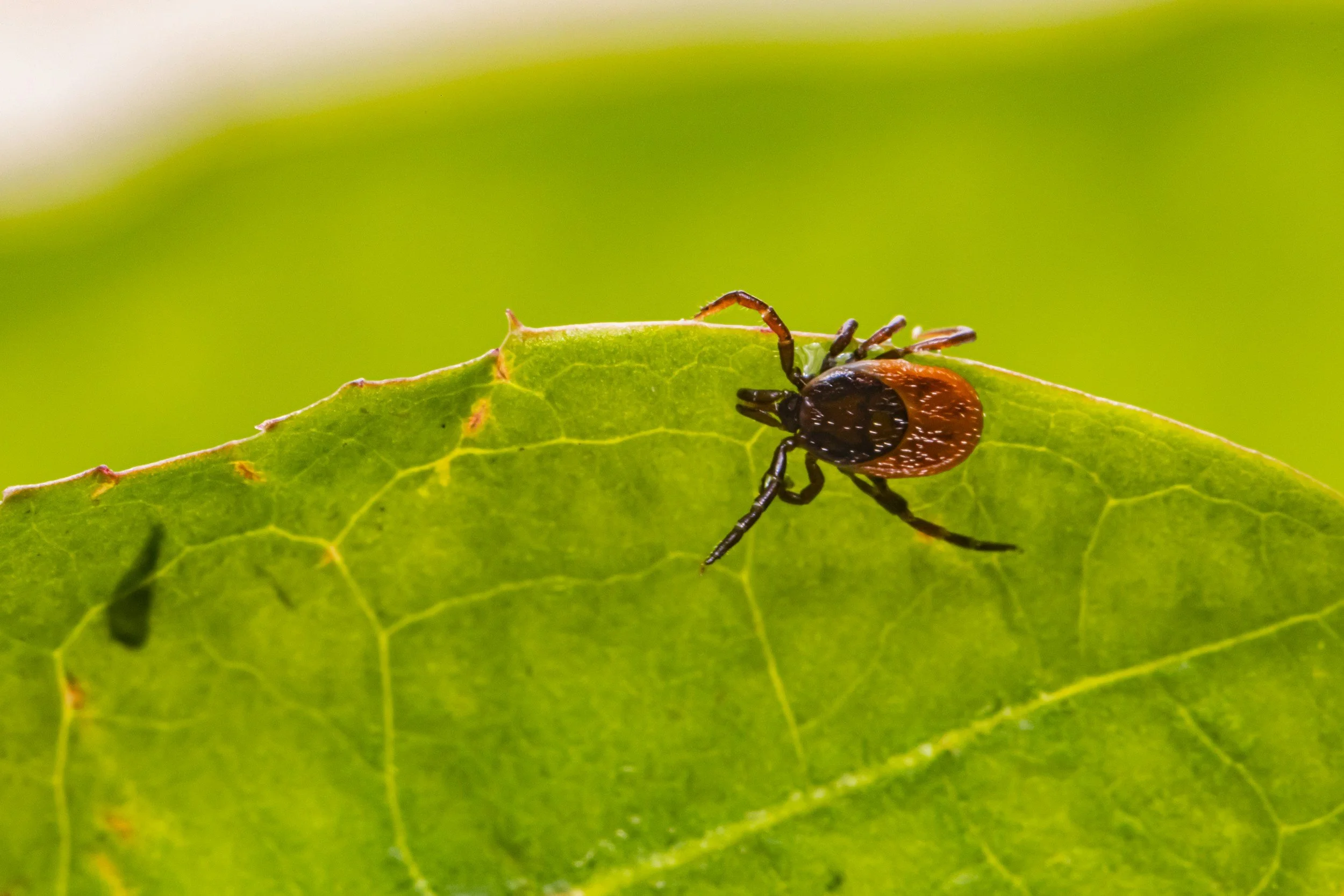
Tick Disease Information
Tick disease is the one of the most common topics about which clients have many questions. In our practice, every client is offered a 4Dx test at their dog’s annual appointment. The 4Dx tests for Lyme Disease, Ehrlichia, Anaplasmosis. Each of these are caused by a different type of bacteria carried in different ticks found in Virginia and many other states, especially on the east coast.
Of 186 our canine patients tested so far in 2026, 66.4% were Negative, 20% were positive for Lyme, 14.6% were positive for Anaplasmosis, and 11.4% were positive for Ehrlichia. A fourth tick disease, Rocky Mountain Spotted Fever (RMSF) is also present in our area. Of 23 patients tested this year, 19 were positive for RMSF, 4 were negative. Of the 19 positives, 13 were symptomatic. It is most common to test for this disease only if the patient is showing symptoms of the disease. The less common tick diseases Babesia and in cats Cytauxzoon felis (Bobcat Fever) are also present in our area but not discussed in this article.
Symptoms of each of the tick diseases overlaps and it is often difficult to pin down which disease the patient has without testing. Symptoms may include Fever, Lethargy, Inappetence, Lameness, and Loss of protein through the kidneys (Protein Losing Nephropathy). All but Lyme may cause decreased platelet levels which can lead to bleeding.
Each of these diseases (albeit Babesia and Bobcat Fever) are treated with doxycycline. This antibiotic is most often used for 21-30 days. Most cases recover well and do not relapse. Patients who have protein loss through the kidneys or decreased platelets may have a longer road to recovery as their disease has become more severe.
In previous years, it was uncommon to see or even test for Rocky Mountain Spotted Fever in our practice. Our first case was seen in 2014. A second case was seen during the same year, and then we did not diagnose this disease again until 2025. Is it possible that we missed a few in the interim? Yes of course, as many dogs who are tested have multiple tick diseases and we may have treated dogs thinking that they had one of the top three mentioned above while they may also have had RMSF. In 2026 the number of cases have dramatically increased. It is worth a look at the common symptoms that we are seeing due to this increase.
RMSF is a bit different from the other tick diseases as it is reported as an acute disease that does not become chronic or recur after treatment. RMSF causes inflammation and destruction of blood vessels. A literature review reveals the most common symptoms of fever, lethargy, decreased appetite, tremors, neurologic signs to include seizures, petechiae (red spots indicating bleeding) on the gums, swollen testicles, limb edema, and skin rash.
Symptoms of patients testing positive at our clinic have included lethargy, joint pain, testicular edema, skin inflammation, limb edema, head and body tremors, and seizures. One cat was tested this year and was found to be positive with limb edema, vision changes, and neurologic symptoms. While most reports from the literature indicate that recovery is most likely with doxycycline, we have found that the neurologic patients seem to have a more difficult time with recovery and have required further treatments to include UV Light blood therapy, homeopathy, and bioenergetic scanning and treatment. Several patients affected neurologically are still showing signs after months of treatment. Such patients are maintained on pain medications and antiseizure medications.
Prevention is important to our dogs and cats, however, it is quite difficult as the tick population increasingly has one of more of these bacteria. Female ticks often pass these diseases to their progeny. This allows for a dramatically increased number of opportunities for ticks to pass these infections to the mammals from which they feed.
There are several chemicals for sale on the internet and at veterinary clinics which are intended to prevent tick bites. The most recent additions to the pesticide market for dogs include NexGard, Bravecto, Symparica, and Credelio. These brands contain very similar chemicals and a quick read of the labels, will reveal each of them end in -laner. These chemicals are not repellents. The tick must bite the dog and when this bite happens, it is possible to transmit tick disease. Thinking through this scenario, the dog’s blood is so toxic that the tick dies upon ingestion of the treated dog’s blood. We have chosen not to carry these brands due to the increasing reports of significant side effects.
Repellents are a better option as it is best to prevent the tick bite to prevent transmission of disease. We have chosen in our clinic to recommend, based on client feedback and less reported side effects than the newer brands: Selarid, Senergy, the Fleas Gone Cat and Dog Tag, Essential oil sprays and collars, Advantix 2, and the Serresto collar.
Finally, we must ask what happens to all of those patients who are positive for tick disease but do not show signs. These patients are healthy enough to manage the bacteria without becoming ill. Keeping our dogs healthy through good nutrition and a healthy, active lifestyle is always the best prevention of both infectious disease and chronic disease.